HMT-Global SiC Wafer Manufacturers & Suppliers


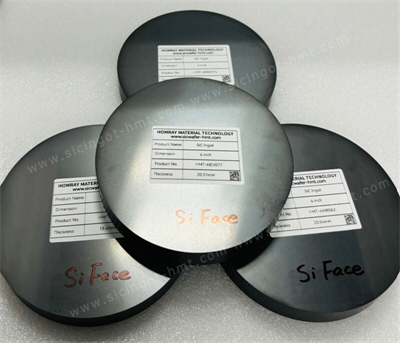
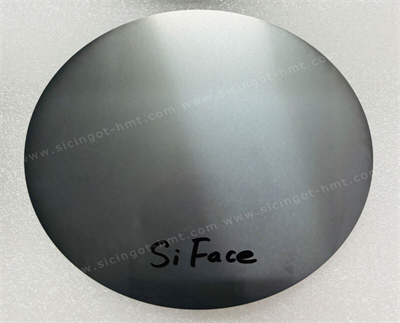
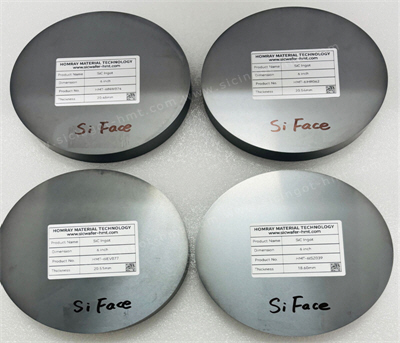
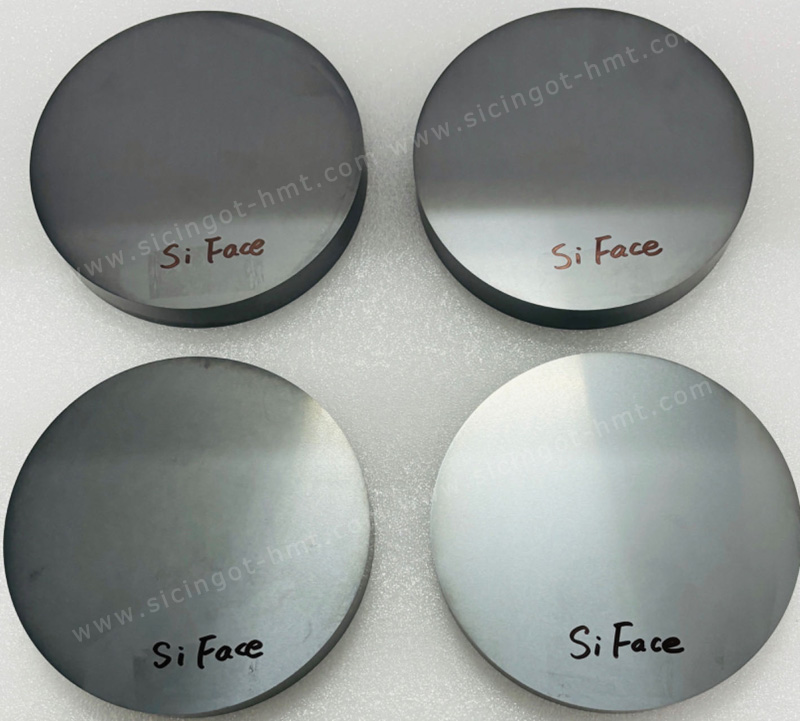
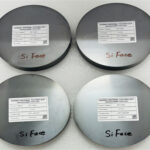
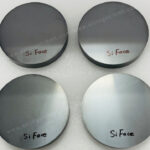
4 inch P Grade SiC Boule
PRODUCT PARAMETERS
Description
Looking for diameter 100mm SiC Boule on the market? Contact 4 inch SiC Boule Manufacturer HMT company. We can provide both D grade and P grade 4 inch SiC boules to worldwide customers. The thickness of SiC boule/ingot about 20mm per piece and P grade can be directly produce P Grade SiC Substrate Wafers.
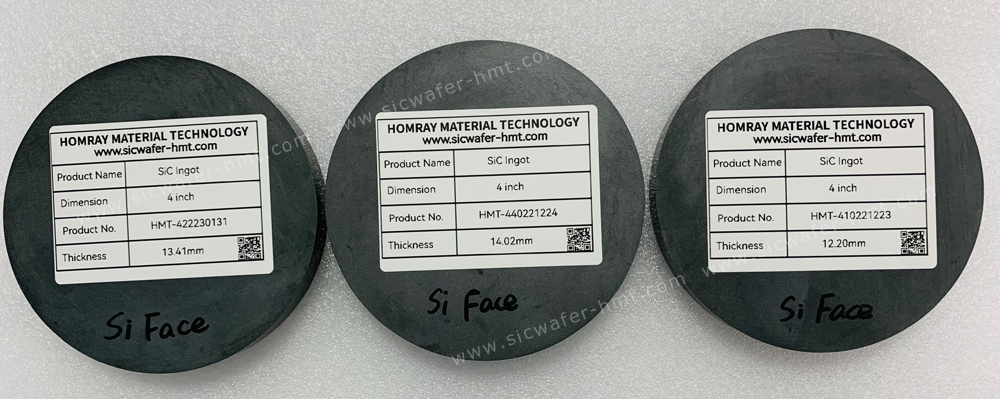
| Item | Spec |
| Diameter | 100±0.25mm |
| Grade | Production |
| Dopant | Nitrogen |
| Orientation | 4 ° toward <11-20> ± 0.5° |
| Thickness | Average 20mm |
| Primary flat length | 32.5±1.5mm |
| Packaging | Unit ingot box |
Key Technologies for SiC Boule Growth
1. Doping Technology for SiC Source Powder
Doping the SiC source powder with an appropriate amount of Cerium (Ce) can stabilize the growth of the 4H-SiC polytype. Practice has proven that Ce doping in the source powder offers several benefits: it can increase the crystal growth rate, enabling faster growth; it allows for better control of the crystal orientation, resulting in a more uniform and regular growth direction; it suppresses the incorporation of impurities and the formation of defects, making it easier to obtain single-polytype crystals and high-quality crystals; and it inhibits corrosion on the crystal’s reverse side while improving the single-crystal yield.
2. Basal Plane Dislocation (BPD) Control Technology
The primary cause of BPD formation is shear stress within the crystal exceeding the critical resolved shear stress (CRSS) of SiC, which activates slip systems. Since BPDs are perpendicular to the crystal growth direction, they are primarily generated during the crystal growth process itself and the subsequent cooling phase.
3. Low-Stress Control Technology
During crystal growth, the presence of stress can cause bending of the internal crystal planes, leading to poor crystal quality and even crystal cracking. Furthermore, high stress levels can increase the density of basal plane dislocations in the wafer. These defects can propagate into the epitaxial layer during subsequent processing, severely impacting the performance of the final devices.
4. Control Technology for Axial and Radial Temperature Gradients
The axial temperature gradient primarily influences the crystal polytype and growth efficiency. An excessively small axial gradient during growth can lead to the appearance of parasitic polycrystalline formations (polycrystals) and also affects the transport rate of vapor-phase species, resulting in a reduced growth rate. Optimal axial and radial temperature gradients are crucial for the rapid growth of SiC crystals and for maintaining stable crystal quality.