HMT-Global SiC Wafer Manufacturers & Suppliers


When AI meets SiC
In the wave of high computing power driven by artificial intelligence, computing centers operate day and night. Training massive models and supporting the rapid development of autonomous driving, scientific discovery, and intelligent robotics. However, behind this brilliance in computing power lies an undeniable “energy anxiety”—the sharply increasing electricity consumption and the bottleneck in conversion efficiency. Traditional silicon-based power devices, the “aging heart” of energy conversion, are increasingly struggling under extreme conditions of high frequency and high temperatures.
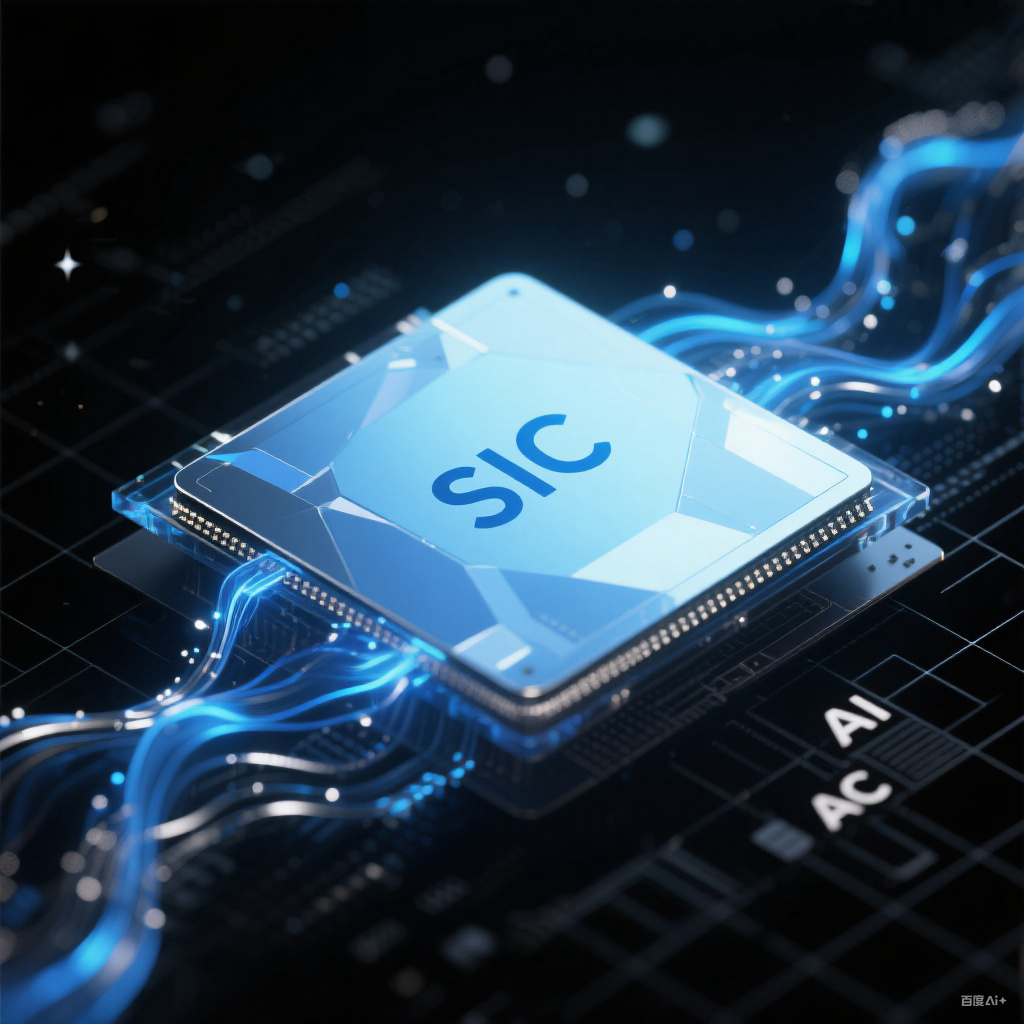
The outstanding performance of SiC power devices:
Superior conversion efficiency: The core advantages of silicon carbide materials enable breakthroughs in overall system efficiency, significantly reducing electrical energy loss.
Higher power density: Higher switching frequencies allow for the use of smaller magnetic components (inductors, transformers) in circuits, reducing the overall power supply size by 30% to 50%.
Simplified cooling systems: Low heat generation drastically reduces the required cooling resources, simplifying cooling structure design.
The core advantages of SiC wafer power devices
Compared to first-generation (silicon-based) semiconductors, third-generation semiconductors (such as silicon carbide) have a larger bandgap. higher electrical conductivity, and higher thermal conductivity. The bandgap of third-generation semiconductors is nearly three times that of first- and second-generation semiconductors, endowing them with stronger capabilities for high voltage and high power, significantly improved temperature resistance (up to over 200°C, compared to the silicon device limit of about 150°C), and unparalleled high-temperature reliability.
Silicon carbide is more suitable as a substrate material: For high-voltage and high-reliability applications, silicon carbide epitaxy is preferred. Smaller size of silicon carbide substrate devices: Due to its larger bandgap, silicon carbide power devices can withstand higher voltages and power, allowing their size to be reduced to about 1/10 that of silicon-based devices. Similarly, because of the larger bandgap, silicon carbide devices can be heavily doped, resulting in lower resistance—about 1/100 that of silicon-based devices.
Lower energy loss in silicon carbide substrate materials: At the same voltage and conversion frequency, under 400V, the energy loss of a silicon carbide MOSFET inverter is about 29% to 60% that of a silicon-based IGBT inverter; under 800V, the energy loss is about 30% to 50% that of a silicon-based IGBT inverter. Silicon carbide devices exhibit significantly lower energy loss.