HMT-Global SiC Wafer Manufacturers & Suppliers


4H-SiC Wafer Suppliers(2inch~8inch)
PRODUCT PARAMETERS
Description
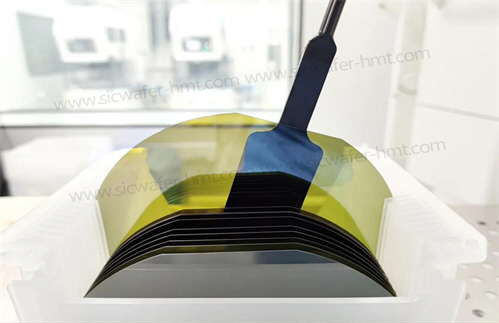
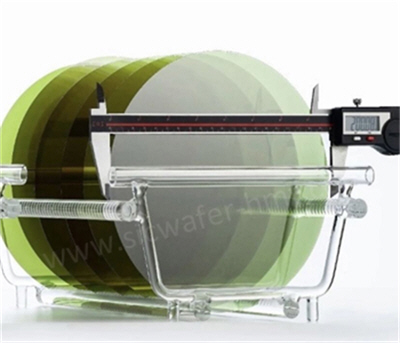
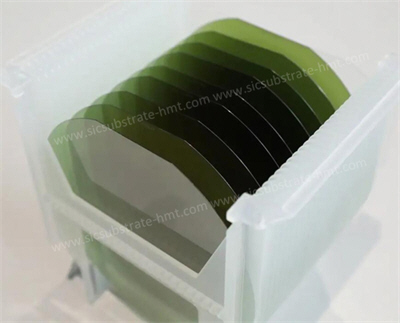
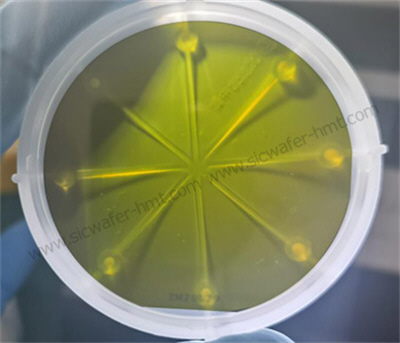
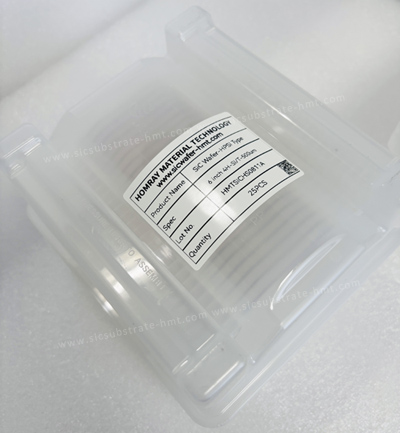
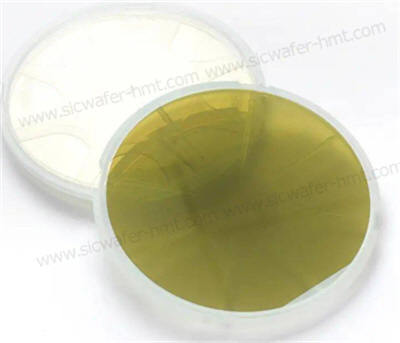
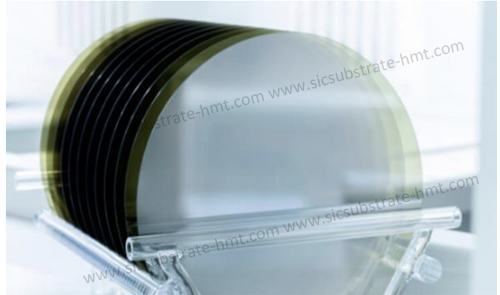
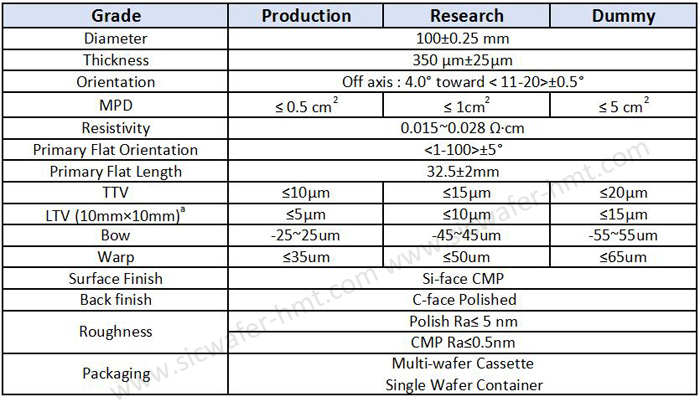
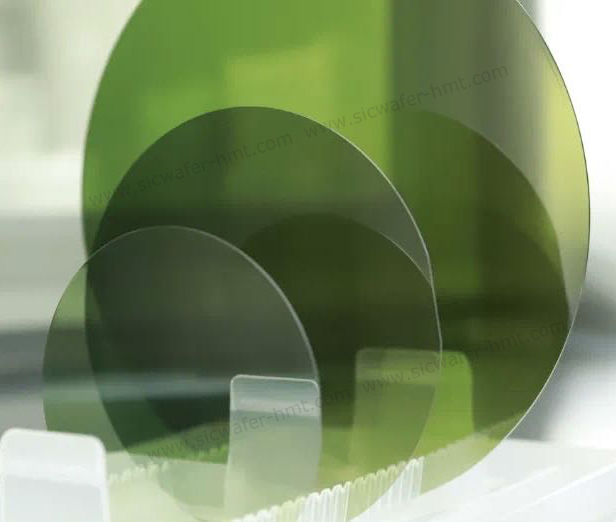
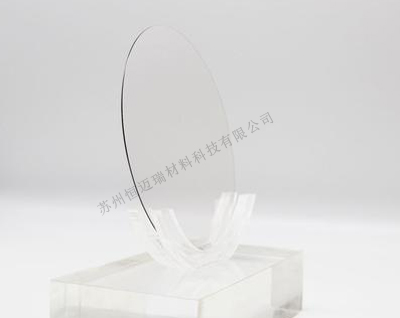
As mass production of 4H-SiC Wafer Suppliers, we can produce (Silicon Carbide)SiC Wafer from 2inch to 8inch in different grades and types. Our conductive N-type SiC wafers support full customization in thickness, key technical parameters, surface roughness, and other specifications. With consistent quality, short lead times, and competitive pricing, we have built lasting partnerships with customers worldwide.
4H-SiC Wafer Specification
4H Polytype Features
Electrical Properties
- Features a wide bandgap of approximately 3.26 eV, which is higher than that of silicon and 6H-SiC. This enables higher breakdown electric field strength and lower leakage current, making it suitable for high-voltage, high-frequency power electronic devices.
- Offers high electron mobility, reaching up to 1200 cm²/(V·s) along the c-axis direction, with similarly high mobility perpendicular to the c-axis. This contributes to improved device switching speed and on-state performance.
- Allows for N-type or P-type doping via elements such as nitrogen (N) or aluminum (Al). The relatively low doping ionization energy enables effective control of carrier concentration to meet diverse device electrical performance requirements.
Thermal Properties
- Exhibits high thermal conductivity, up to 3.7 W/(cm·K), facilitating rapid heat dissipation. This ensures stable device operation in high-temperature environments and suits high-temperature, high-power applications.
- Has a relatively low coefficient of thermal expansion (approximately 4.1 ppm/°C), providing good dimensional stability under temperature fluctuations. This helps minimize performance degradation or damage caused by thermal stress.
Optical Properties
- Provides high transmittance from the ultraviolet to near-infrared spectral range, making it applicable in optoelectronic devices such as photodetectors and lasers. Its optical properties are closely related to crystal structure and doping conditions and can be optimized by adjusting process parameters.