HMT-Global SiC Wafer Manufacturers & Suppliers


Breaking Optical Compromises: The Physical Advantages of SiC
Before silicon carbide (SiC) emerged, AR waveguide technology relied primarily on high-index glass or polymer resins, both of which had fundamental limitations. SiC Substrates Supplier offers 8 inch high purity SI type SiC wafers with very preferential prices.
High-Index Glass: The Rainbow Dilemma
While offering a relatively high refractive index (~1.8–2.0), achieving wide field-of-view (FOV) required stacked multilayer lenses, resulting in bulky devices (typically 2–3 mm thick). Worse, these diffractive structures produced severe rainbow effects and ghosting under complex lighting, drastically degrading user experience. As one Meta optical scientist quipped, wearing such glasses felt “like being in a disco ball—rainbows everywhere.”
Polymers/Resins: Thermal Bottlenecks
Though lightweight, their low refractive index (~1.5–1.7) inherently limited FOV expansion. Additionally:
- Surface roughness: Difficulty achieving nanoscale smoothness caused light scattering and image blur.
- Catastrophic thermal limitations: With thermal conductivity of just ~0.2 W/m·K, resins couldn’t dissipate heat from high-brightness light sources, becoming the system’s critical performance bottleneck.
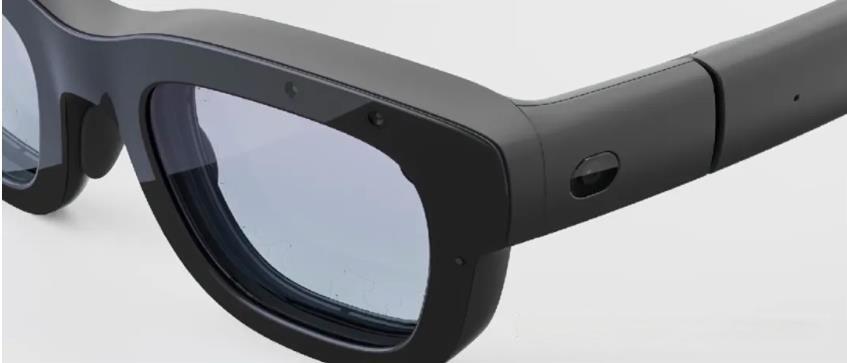
SiC: The Game-Changing Solution
Silicon carbide addresses all these pain points by combining unmatched physical properties:
1. Ultra-High Refractive Index (n ≈ 2.6–2.7)
The core advantage:
- 50% higher than glass, 17.4% above lithium niobate.
- By Snell’s Law, this enables total internal reflection at larger angles, allowing single-layer waveguides to achieve >70°–80° FOV at just 0.55 mm thickness (vs. 2–3 mm for glass).
- Smaller grating periods push stray-light diffraction outside the human FOV, eliminating rainbow artifacts for pristine visuals.
2. Exceptional Thermal Conductivity (~490 W/m·K)
- On par with copper, 100× glass, 2,000× resins.
- Critical for high-brightness Micro-LEDs, which generate intense heat in tiny areas.
- Acts as a passive heat spreader, uniformly dissipating heat across the lens, ensuring system stability and LED longevity.
3. Extreme Hardness & Durability (Mohs ≈ 9.5)
- Second only to diamond, offering scratch resistance for daily wear.